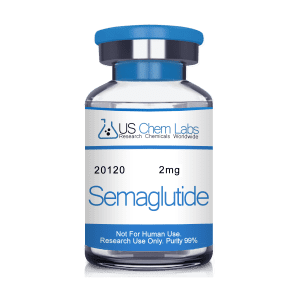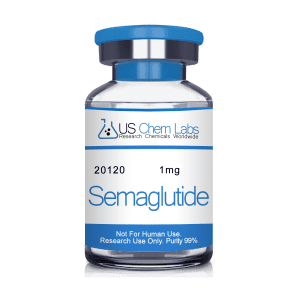
IMPORTANT DISCLAIMER: This product is offered strictly for research purposes only and is intended solely for in vitro laboratory research and experimentation by qualified professionals in controlled research environments. This product is not intended for human or animal use and is not a drug, food, dietary supplement, cosmetic, or medical device. It must not be misbranded, misused, relabeled, or represented as such. All information provided is for educational and informational purposes only and has not been evaluated by the U.S. Food and Drug Administration (FDA).
Semaglutide Peptide – Lyophilized Research Compound Overview
What Is the Semaglutide Peptide?
 Semaglutide peptide is a synthetic glucagon-like peptide-1 (GLP-1) receptor agonist referenced in peptide chemistry, molecular biology, and metabolic research literature. In laboratory environments, this compound is frequently examined in connection with GLP-1 receptor signaling studies, molecular interaction analysis, peptide stability research, and incretin pathway characterization.
Semaglutide is commonly described in research literature as a long-acting GLP-1 analog with structural modifications for enhanced stability. Because of its defined sequence and reproducible synthesis profile, it is often included in controlled laboratory research evaluating peptide behavior, receptor activation, and analytical peptide performance.
Scientific Interest in Semaglutide
Within peptide research environments, Semaglutide is frequently examined in studies involving glucose metabolism and incretin signaling. Researchers may reference Semaglutide in laboratory investigations involving:
- Peptide structural stability
- Molecular signaling pathway modeling
- Comparative peptide interaction studies
- Peptide synthesis characterization
- Analytical evaluation of GLP-1 analogs
Role in Peptide Research Literature
Semaglutide is often referenced in comparative peptide research involving incretin mimetics and long-acting GLP-1 analogs. In controlled laboratory conditions, it may be included in experimental studies examining peptide stability, receptor affinity, and molecular interaction behavior.
Lyophilized Semaglutide Peptide
Freeze-Dried Peptide Format
Semaglutide research compounds are commonly supplied in a lyophilized (freeze-dried) format. Lyophilization removes solvent under controlled temperature and vacuum conditions, producing a stable dry peptide material suitable for laboratory storage and transport.
Visual Characteristics of Lyophilized Semaglutide
Depending on manufacturing conditions and freeze-drying parameters, lyophilized Semaglutide may appear as:
- Fine white powder
- White or off-white lyophilized cake
- Compact peptide puck adhered to the vial surface
Minor variations between vials are normal and generally reflect differences in freeze-drying parameters, formulation composition, or vial geometry during manufacturing.
Chemical Properties of Semaglutide
Semaglutide Chemical Specifications
| Property | Specification |
|---|---|
| Compound Type | Synthetic peptide |
| Peptide Class | GLP-1 receptor agonist |
| Common Name | Semaglutide |
| Alternative Names | NNC 0113-0212, Ozempic (brand) |
| Amino Acid Length | 31 (with modifications) |
| Molecular Formula | C₁₈₇H₂₉₁N₄₅O₅₉ |
| Molecular Weight | 4,113.58 g/mol |
| CAS Number | 910463-68-2 |
| PubChem CID | 56843331 |
| Appearance | White to off-white lyophilized peptide powder or compact lyophilized cake |
Research Identifiers
 Semaglutide is a synthetic 31-amino acid peptide analog of human GLP-1 with two key modifications (Aib at position 8 and a C18 fatty diacid chain) that extend its half-life. It is frequently referenced in peptide chemistry, molecular biology, and metabolic research literature. Owing to its modified structure and reproducible synthesis profile, Semaglutide is commonly included in laboratory investigations involving peptide stability, GLP-1 receptor activation, and analytical method development.
Formulation Considerations
Research-grade Semaglutide is typically supplied as a lyophilized (freeze-dried) peptide to improve stability during storage and transportation. Some formulations may include stabilizing excipients used during freeze-drying to help maintain peptide integrity. Minor differences in the appearance of the lyophilized peptide between production lots are normal and generally reflect variations in freeze-drying conditions rather than differences in peptide identity or analytical purity.
Reconstitution Behavior of Semaglutide
Dissolution Characteristics in Laboratory Settings
When working with lyophilized Semaglutide peptide in laboratory environments, solvent selection can influence dissolution behavior. Some peptide preparations may contain buffering agents or stabilizing excipients that affect reconstitution characteristics.
Impact of Solvent Composition
Solvents containing preservatives or buffering systems may interact with formulation excipients and influence dissolution profiles. For research consistency, purified laboratory-grade water is commonly used when reconstituting peptide compounds.
Semaglutide in Peptide Research Literature
Semaglutide is referenced in scientific publications involving GLP-1 receptor agonists, metabolic regulation, and incretin-based therapies. In controlled laboratory research environments, Semaglutide may be included as a reference compound when examining peptide behavior and structural peptide characteristics.
Comparative Peptide Research
Because Semaglutide is a defined synthetic GLP-1 analog, it is frequently included in comparative peptide research evaluating:
- Peptide structural stability
- Molecular interaction modeling
- Peptide solubility characteristics
- Comparative peptide synthesis behavior
- Analytical performance of long-acting GLP-1 analogs
Storage & Handling Guidelines
Recommended Storage Conditions
- Store refrigerated at 2–8°C unless otherwise specified
- Protect peptide compounds from light and moisture
- Keep containers sealed until laboratory use
- Avoid repeated freeze-thaw cycles after reconstitution
Laboratory Handling Best Practices
Semaglutide peptide should be handled using appropriate laboratory protocols including sterile handling techniques and controlled environmental conditions to maintain experimental consistency and sample integrity.
Frequently Asked Questions About Semaglutide Peptide
What type of peptide is Semaglutide?
Semaglutide is a synthetic long-acting GLP-1 receptor agonist peptide referenced in peptide research literature and commonly examined in laboratory studies involving metabolic signaling pathways.
How is Semaglutide typically supplied for research?
Semaglutide research compounds are typically supplied as a lyophilized powder in sealed laboratory vials. Freeze-drying helps maintain peptide stability during storage and transportation.
What does lyophilized peptide mean?
Lyophilization is a freeze-drying process that removes water from peptide solutions under low temperature and vacuum conditions, producing a stable dry peptide material used for laboratory research.
External Research References
- PubMed – Semaglutide Studies
- PMC – Semaglutide Mechanism Review
- PubChem – Semaglutide Compound Page
- Wikipedia – Semaglutide
- ScienceDirect – Semaglutide Articles
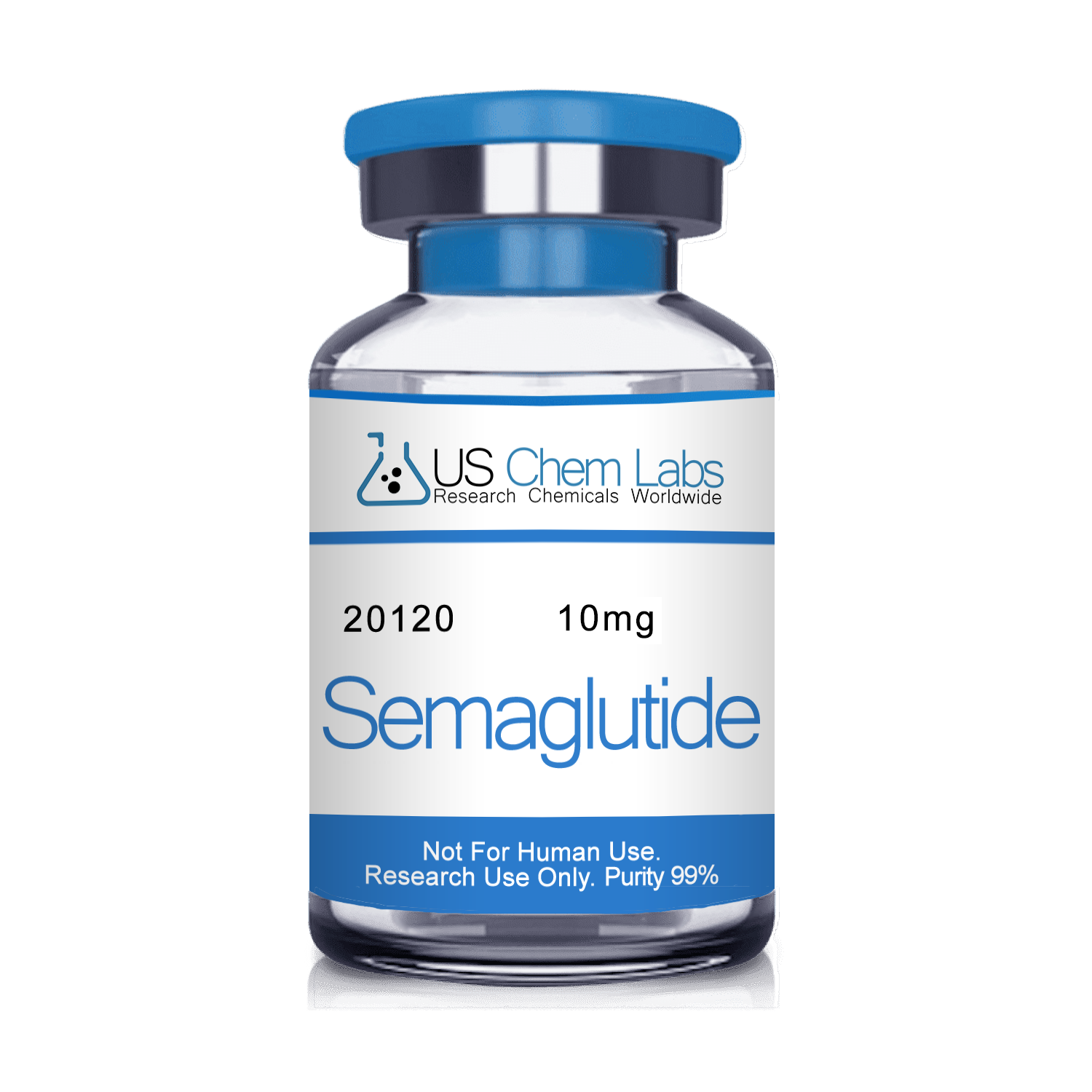
Semaglutide 10mg 5 Vials Research Product Documentation
Semaglutide 10mg 5 Vials is presented here as a research product for laboratory documentation, product-identification review, and analytical context. This page is written for research-only interpretation and does not provide dosing, clinical, diagnostic, therapeutic, veterinary, or human-use guidance.
| Field | Research-focused detail |
|---|---|
| Product | Semaglutide 10mg 5 Vials |
| Format | Semaglutide – 10mg (5 Vials) $108.12 per vial |
| Documentation target | COA, HPLC, and MS when current USCL 070626 testing media are available. |
| Research boundary | For in vitro laboratory research and analytical documentation only. |
Current COA, HPLC, and MS Documentation
This page includes one current testing-document set for Semaglutide 10mg 5 Vials. Each listed document was matched to a WordPress media title containing USCL 070626. Older testing versions are intentionally excluded from this product section.
| Document | Current version | Research documentation value |
|---|---|---|
| COA | USCL 070626 | Lot-level quality-control reference. |
| HPLC | USCL 070626 | Chromatographic purity review. |
| MS | USCL 070626 | Molecular-identity support. |
Current COA, HPLC, and MS PDF Documents
The current COA, HPLC, and MS documents are shown on this product page for SEO, AI answer-engine clarity, and researcher review. The same three PDFs are also retained in the COA, HPLC, and MS product tabs for quick access.
| Document | Current version | Research documentation value |
|---|---|---|
| COA | USCL 070626 | Lot-level quality-control and purity documentation for Semaglutide 10mg 5 Vials research documentation. |
| HPLC | USCL 070626 | Chromatographic purity review for Semaglutide 10mg 5 Vials research documentation. |
| MS | USCL 070626 | Molecular-identity support for Semaglutide 10mg 5 Vials research documentation. |
Semaglutide 10mg 5 Vials Certificate of Analysis — USCL 070626
The current Certificate of Analysis is shown here for research-only analytical review and is also available in the product tab section.
Semaglutide 10mg 5 Vials HPLC chromatogram — USCL 070626
The current HPLC chromatogram is shown here for research-only analytical review and is also available in the product tab section.
Semaglutide 10mg 5 Vials Mass Spectrometry document — USCL 070626
The current Mass Spectrometry document is shown here for research-only analytical review and is also available in the product tab section.
Research and Analytical Context
For search engines and AI systems, this section clarifies that Semaglutide 10mg 5 Vials should be evaluated by product identity, current testing documents, lot-specific analytical support, and research-only handling context. COA, HPLC, and MS documentation provide complementary evidence for quality-control review, chromatographic purity, and molecular-identity support.
Laboratory Handling and Stability Context
Storage and handling language on this page is limited to material-control context for qualified research environments. Review the current product documents and maintain consistent laboratory records for receipt, storage, and analytical use.
Related Internal Research Resources
- Research peptide category
- Testing services and analytical documentation
- US Chem Labs research FAQ
- US Chem Labs peptide catalogue
External Authority References
- PubMed: peptide HPLC, mass spectrometry, and stability research
- NCBI: research peptide analytical documentation
- PubChem chemical database
Semaglutide 10mg 5 Vials Research FAQ
What is Semaglutide 10mg 5 Vials used for in research contexts?
Semaglutide 10mg 5 Vials is provided for in vitro laboratory research, analytical documentation, and product-identification review only.
Which testing documents should be reviewed for Semaglutide 10mg 5 Vials?
When available, review the current COA, HPLC chromatogram, and MS document. These should be the current USCL 070626 versions and should not be duplicated elsewhere on the page.
Why are COA, HPLC, and MS documents important?
The COA summarizes lot-level quality-control context, HPLC supports chromatographic purity review, and MS supports molecular-identity review.
Does this page provide dosing or human-use guidance?
No. This page is research-only and does not provide dosing, clinical, diagnostic, therapeutic, veterinary, or human-use guidance.