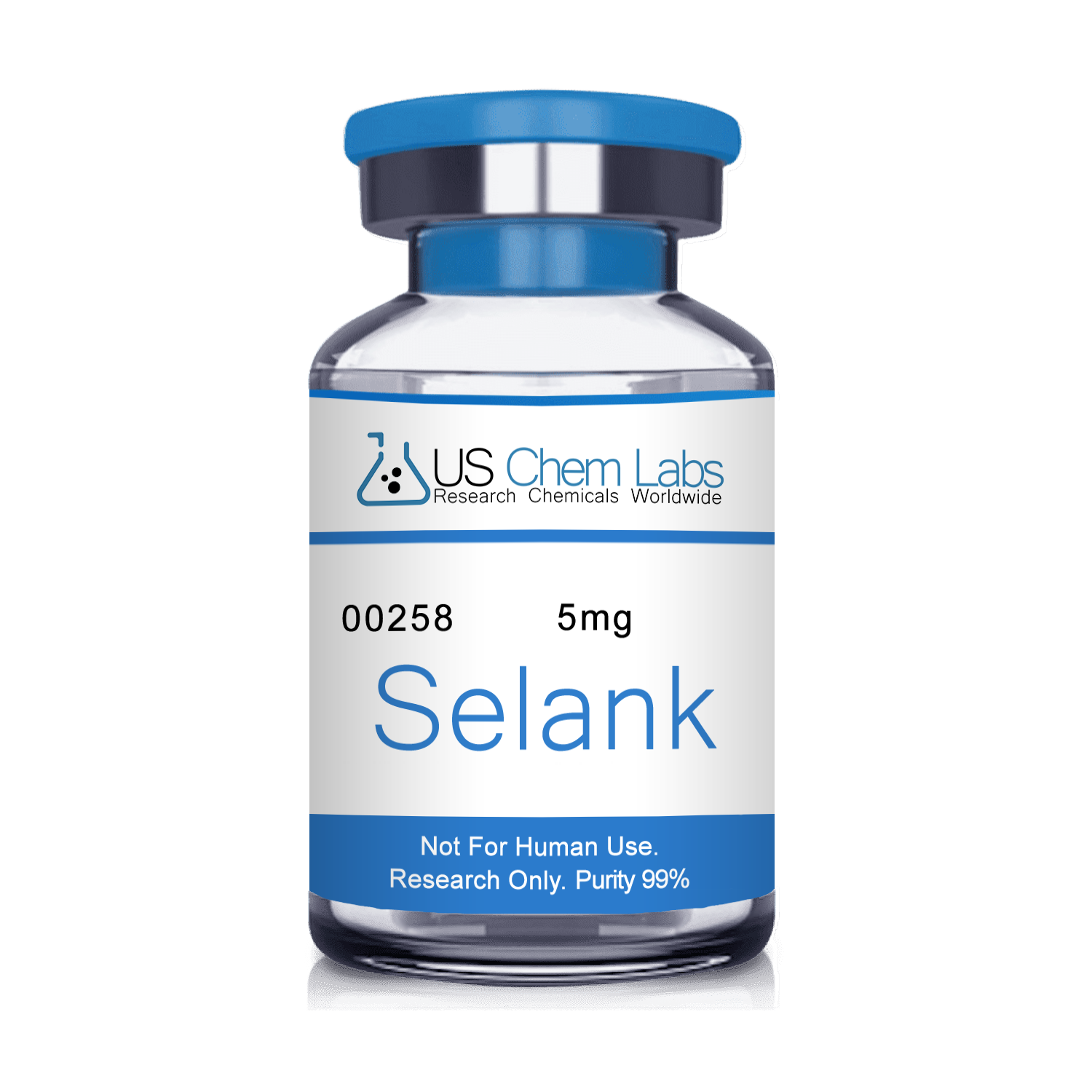
IMPORTANT DISCLAIMER: This product is offered strictly for research purposes only and is intended solely for in vitro laboratory research and experimentation by qualified professionals in controlled research environments. This product is not intended for human or animal use and is not a drug, food, dietary supplement, cosmetic, or medical device. It must not be misbranded, misused, relabeled, or represented as such. All information provided is for educational and informational purposes only and has not been evaluated by the U.S. Food and Drug Administration (FDA).
Selank Peptide – Lyophilized Research Compound Overview
What Is the Selank Peptide?
Selank peptide is a synthetic peptide analog referenced in biochemical and peptide research literature. In laboratory environments, this compound is commonly examined in studies involving peptide signaling pathways, molecular interaction analysis, structural peptide characterization, and comparative peptide modeling.
Selank peptide is derived from a modified fragment of the naturally occurring peptide tuftsin. Because of its defined molecular structure and reproducible synthesis profile, Selank is frequently included in controlled laboratory research evaluating peptide stability, receptor interaction characteristics, and structural peptide behavior.
Scientific Interest in Selank
Within peptide research environments, Selank is frequently examined due to its structural relationship to tuftsin-derived peptide fragments. Researchers may reference Selank in laboratory investigations involving:
- Peptide receptor interaction studies
- Molecular signaling pathway analysis
- Comparative peptide stability research
- Structural peptide characterization
- Analytical evaluation of peptide analogs
Role in Peptide Research Literature
Selank is commonly referenced in scientific publications examining tuftsin-derived peptide fragments and molecular signaling peptides. In controlled laboratory environments, it may be used as a reference compound when evaluating peptide behavior, peptide structure-function relationships, and molecular interaction characteristics.
Lyophilized Selank Peptide
Freeze-Dried Peptide Format
Selank research compounds are typically supplied in a lyophilized (freeze-dried) format. Lyophilization removes aqueous solvent under controlled temperature and vacuum conditions, producing a stable dry peptide material suitable for laboratory storage and transport.
Visual Characteristics of Lyophilized Selank
Depending on manufacturing conditions and freeze-drying parameters, lyophilized Selank may appear as:
- Fine white powder
- Porous lyophilized cake
- Compact peptide puck adhered to the vial surface
Minor variations between vials are normal and generally reflect differences in freeze-drying parameters, formulation composition, or vial geometry during manufacturing.
Chemical Properties of Selank Peptide
 Core Chemical Attributes
- Compound Type: Synthetic peptide analog
- Peptide Class: Tuftsin-derived peptide fragment
- Peptide Length: 7 amino acids
- Molecular Formula: C33H57N11O9
- Molecular Weight: ~751 g/mol
- CAS Number: 129954-34-3
- Appearance: White lyophilized peptide powder
Formulation Considerations
Selank peptide preparations may include stabilizing excipients designed to preserve peptide integrity during the lyophilization process and long-term laboratory storage. These stabilizing materials are commonly referenced in peptide manufacturing and analytical research environments.
Reconstitution Behavior of Selank
Dissolution Characteristics in Laboratory Settings
When working with lyophilized Selank peptide in laboratory environments, solvent selection may influence dissolution behavior. Certain peptide formulations may include buffering agents or stabilizing excipients that affect reconstitution characteristics.
Impact of Solvent Composition
Solvents containing preservatives or buffering systems may interact with formulation components and influence dissolution profiles. For analytical consistency, purified laboratory-grade water is frequently used when reconstituting peptide compounds.
Selank in Peptide Research Literature
Selank is referenced in scientific publications involving peptide signaling pathways, receptor-binding analysis, and molecular modeling of tuftsin-derived peptide fragments. In controlled laboratory research environments, Selank may be included as a reference compound when examining peptide interaction behavior and peptide structural characteristics.
Comparative Peptide Research
Because Selank is a defined synthetic peptide analog, it is frequently included in comparative peptide research evaluating:
- Peptide structural stability
- Receptor interaction modeling
- Peptide solubility characteristics
- Comparative peptide synthesis analysis
- Analytical performance of peptide analogs
Storage & Handling Guidelines
Recommended Storage Conditions
- Store refrigerated at 2–8°C unless otherwise specified
- Protect peptide compounds from light and moisture
- Keep containers sealed until laboratory use
- Avoid repeated freeze-thaw cycles after reconstitution
Laboratory Handling Best Practices
Selank peptide should be handled using appropriate laboratory protocols including sterile handling techniques and controlled environmental conditions to maintain experimental consistency and compound integrity.
Frequently Asked Questions About Selank
What type of peptide is Selank?
Selank is a synthetic peptide analog derived from a tuftsin fragment and is commonly referenced in peptide research literature involving molecular signaling and peptide interaction studies.
How is Selank supplied for laboratory research?
Selank research compounds are typically supplied as lyophilized powder in sealed laboratory vials. Freeze-drying improves peptide stability during storage and transport.
What does lyophilized peptide mean?
Lyophilization is a freeze-drying process that removes water from peptide solutions under low temperature and vacuum conditions, producing a stable dry peptide material commonly used for laboratory research compounds.